

In the shipping industry, decisions revolve around two main options: LTL and FTL. These terms stand for Less Than Truckload (LTL) and Full Truckload (FTL) shipping. Understanding their differences will help you choose the best option for your needs.
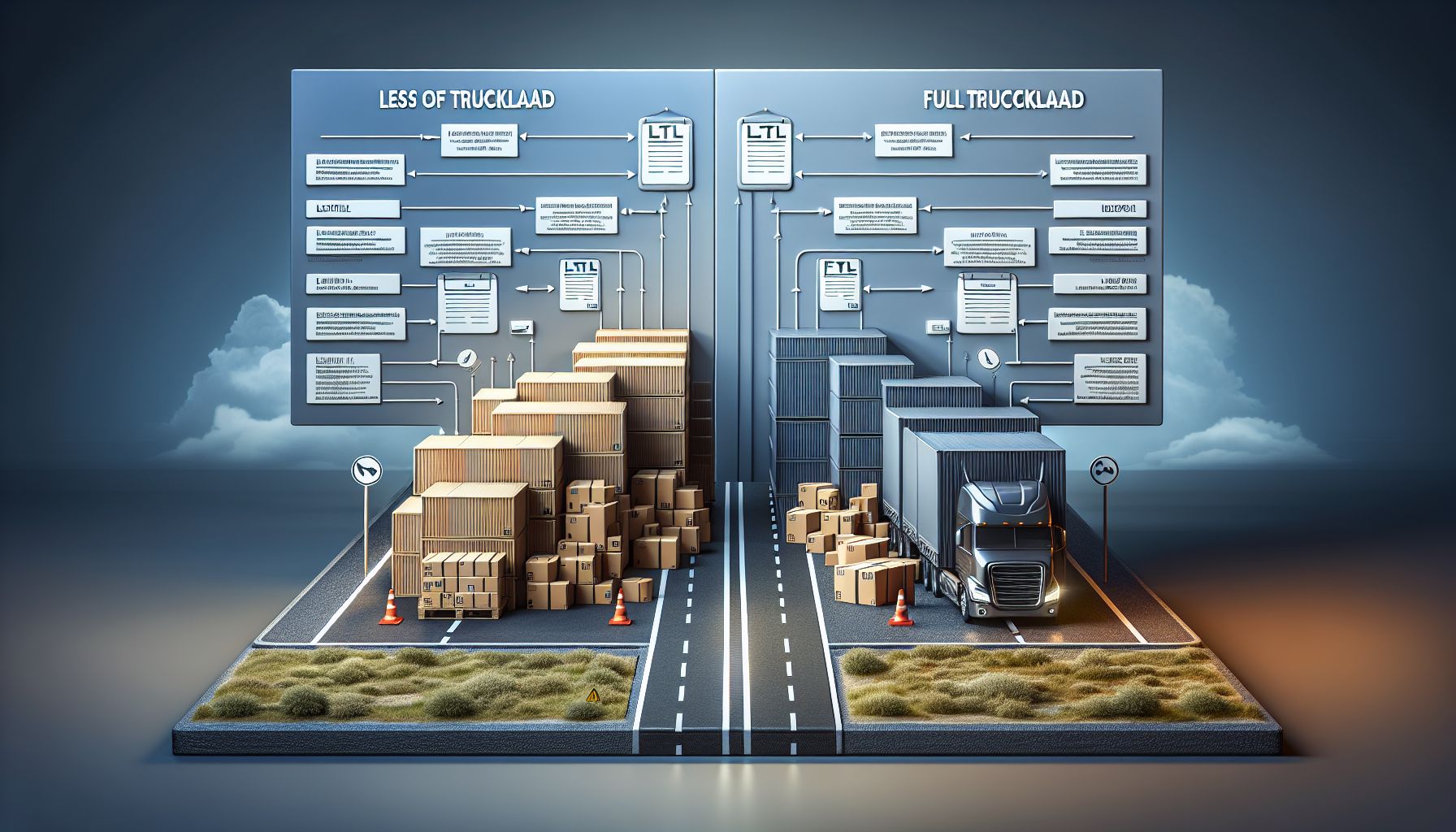
What Is LTL Shipping?
LTL shipping involves combining shipments from multiple customers on one truck. Each customer pays for only the portion of the truck they use. This option suits businesses that ship items too big for parcel delivery but not enough to fill a whole truck.
Advantages of LTL Shipping
- Cost Efficiency: Customers only pay for the space their freight occupies. This results in significant savings for small to medium shipments.
- Frequent Scheduling: LTL carriers run regular routes. This means shipments can move quickly without waiting for a full truckload.
- Environmental Impact: By maximizing truck capacity, LTL shipping reduces the number of trucks needed on the road.
Disadvantages of LTL Shipping
- Longer Delivery Times: LTL shipments often make multiple stops, which can lead to longer delivery times.
- Increased Handling: More stops mean more handling of goods, increasing the risk of damage.
- Complex Tracking: With multiple shipments on a single truck, tracking can be more complicated.
Learn more about LTL shipping explained.
What Is FTL Shipping?
FTL shipping means renting an entire truck for a single shipment. This is ideal for large shipments that fill a truck or require a dedicated mode of transport.
Advantages of FTL Shipping
- Faster Delivery: Since the truck directly transports goods to their destination, FTL offers faster delivery times.
- Less Risk of Damage: Cargo is less likely to be handled multiple times. This reduces the chance of damage.
- Dedicated Service: The truck heads straight to the delivery point. There are no stops for other shipments.
Disadvantages of FTL Shipping
- Higher Costs: Renting a whole truck is more expensive. This makes it less economical for small shipments.
- Limited Flexibility: Once the truck leaves, making changes to the route or delivery can be challenging.
- Environmental Concerns: FTL can lead to underutilized space when the truck is not full, increasing the environmental footprint.
LTL vs. FTL: Key Differences
Cost
LTL usually costs less since you pay only for the space you use. FTL involves paying for the entire truck, making it more costly. Companies should weigh cost against urgency and safety concerns.
Speed
FTL tends to be faster. This is because it travels directly to the destination without interim stops. LTL can be slower due to multiple drop-offs.
Shipping Size
The shipment size directly influences the choice between LTL and FTL. Smaller loads are better suited for LTL, while larger loads require FTL.
Handling and Risk
FTL involves less handling, which means lower risk of damage. LTL can increase handling risk because of multiple stops and transfers.
Choosing the Right Option
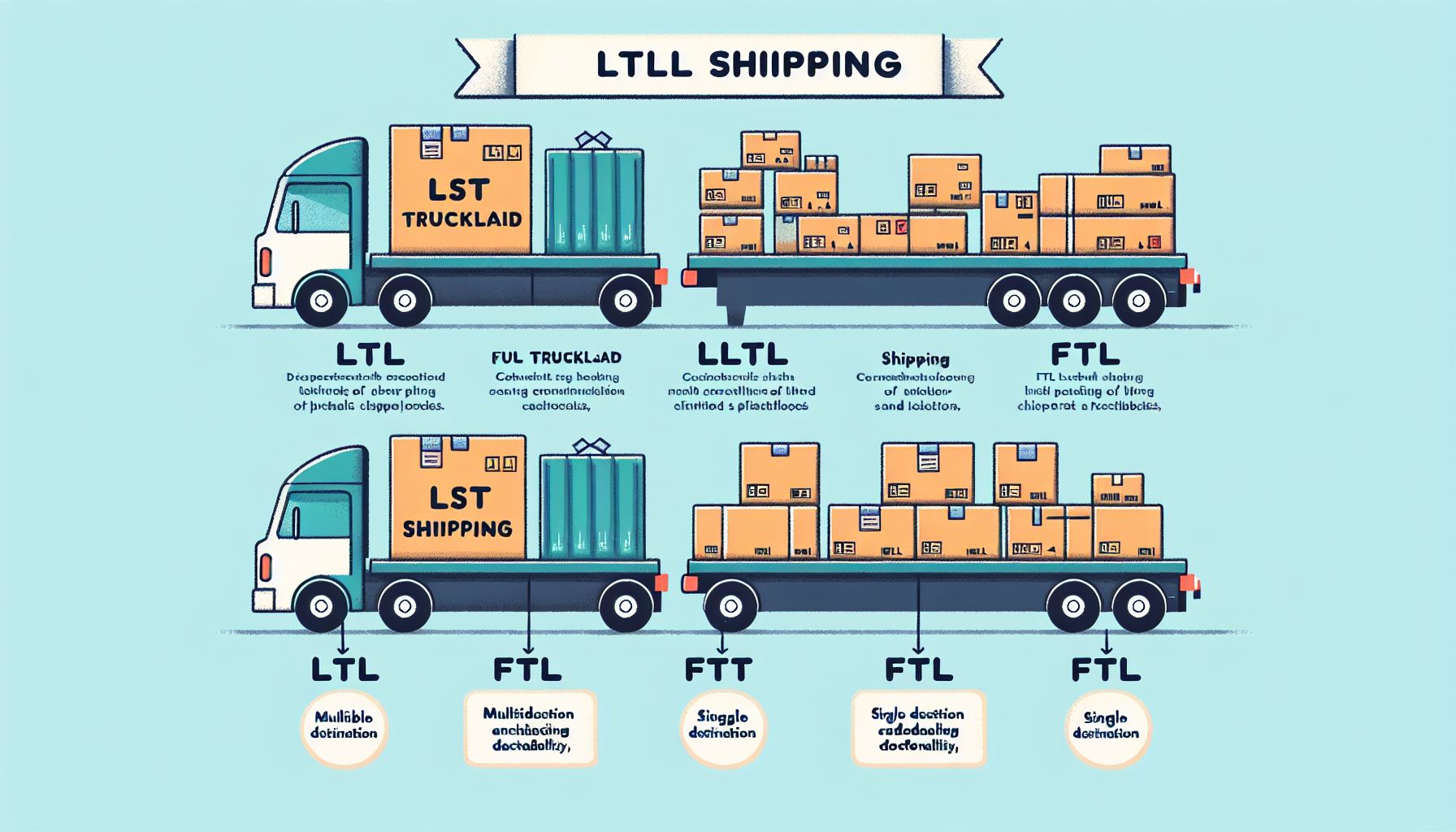
Assess Your Needs
- Shipping Frequency: Frequent shippers with less-than-truckload quantities should consider LTL.
- Time Sensitivity: Time-sensitive cargo demands the speed of FTL.
- Budget Constraints: Budget-conscious companies often opt for LTL.
- Risk Management: Fragile or high-value items may benefit from the safety of FTL.
Consider Real-World Examples
- Small Retailer: A boutique shop shipping monthly stock can benefit from LTL, paying for only part of the truck.
- Manufacturing Plant: A factory supplying parts to another plant might choose FTL to reduce transit time and handling risks.
- E-commerce Business: Companies with mixed shipment sizes use both options, maximizing space and delivery efficiency according to shipment load.
Conclusion
Deciding between LTL and FTL shipping depends on your specific needs and priorities. Companies must evaluate shipment size, cost, time sensitivity, and handling risks. Both LTL and FTL have their strengths and weaknesses.
Explore your options further by visiting Freightquote and Meganite.
Shipping decisions impact business efficiency. Make informed choices to ensure smooth and cost-effective transportation.




Comments are closed